Temporary weather protection for a live life sciences jobsite
Biopharmaceutical construction is booming across the US, from New Jersey’s pharma corridor to North Carolina’s Research Triangle and the growing Boston/Cambridge biotech cluster. Pressure to keep these projects on seschdule is intense. Environmental control, cleanroom construction, and equipment installation all depend on dry, stable, contamination-free conditions long before the permanent building envelope is complete.
That was exactly the challenge facing Democo, one of Belgium’s leading contractors. With the permanent building envelope still months from completion, Democo’s project team needed to protect the open facade from wind and rain without slowing down the jobsite.
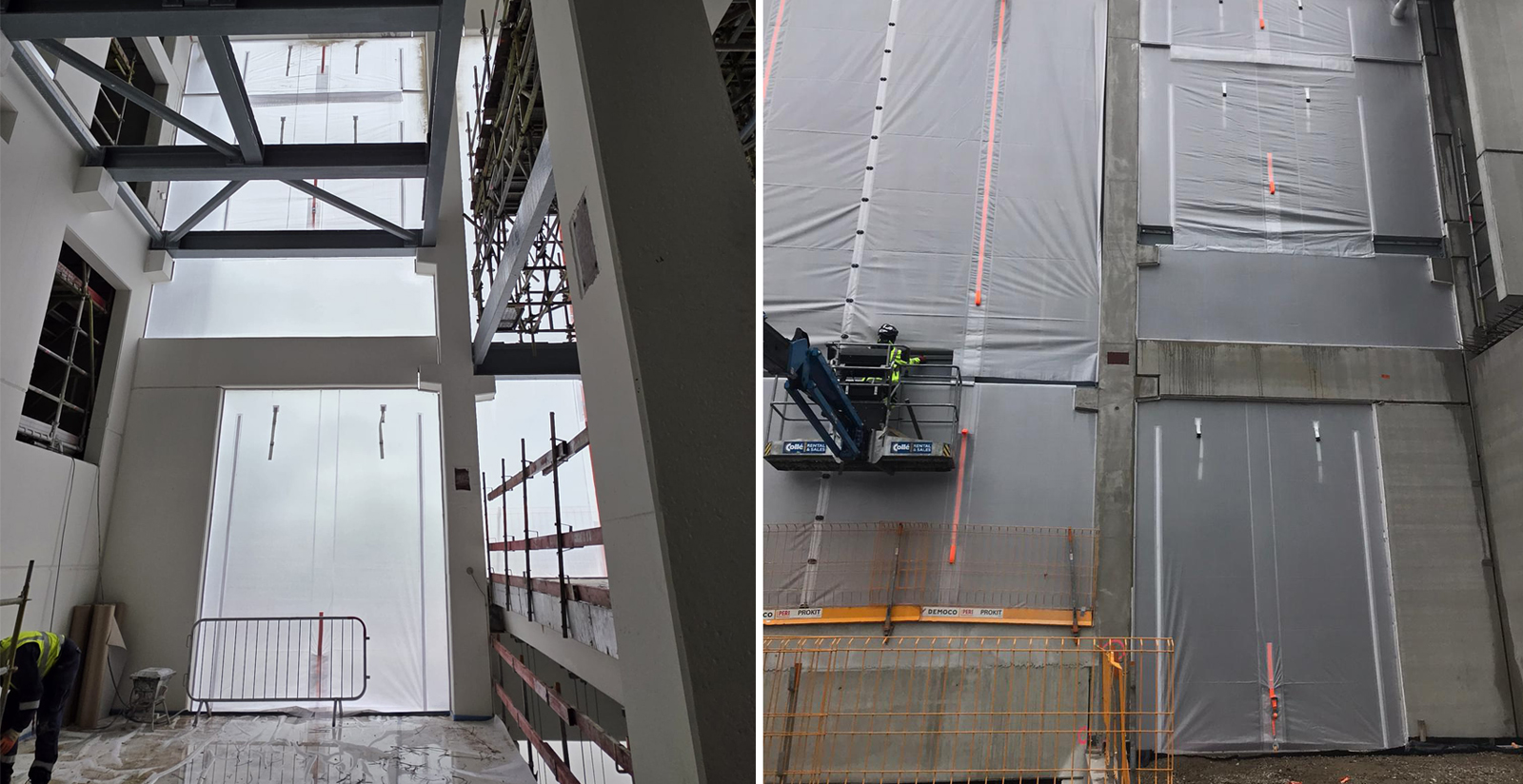
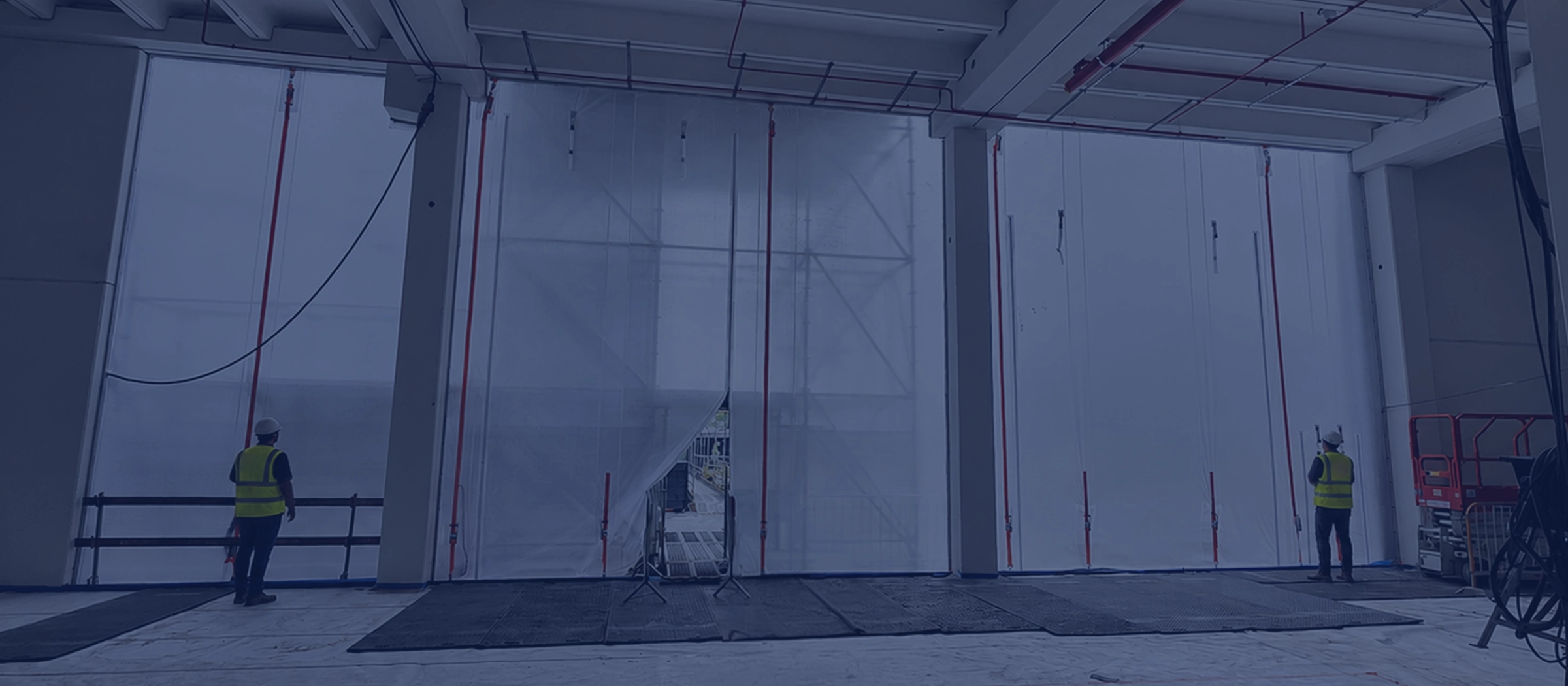
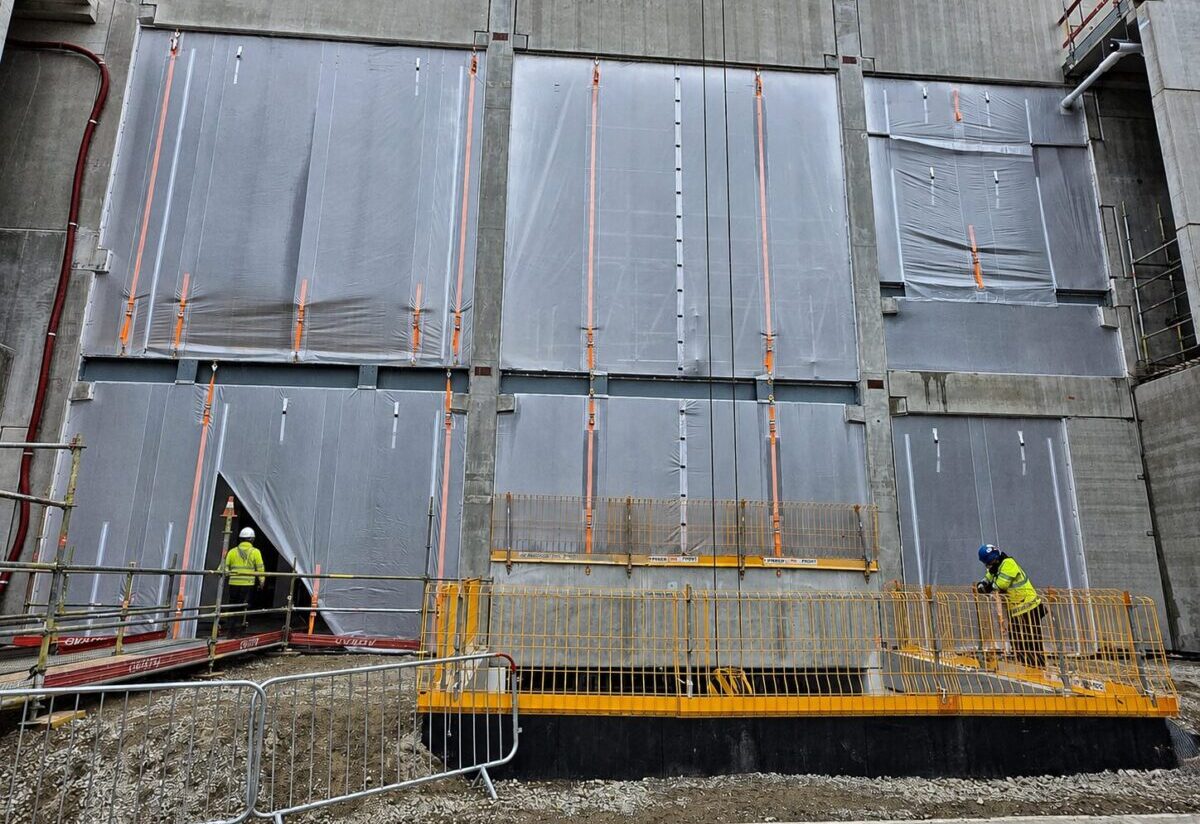
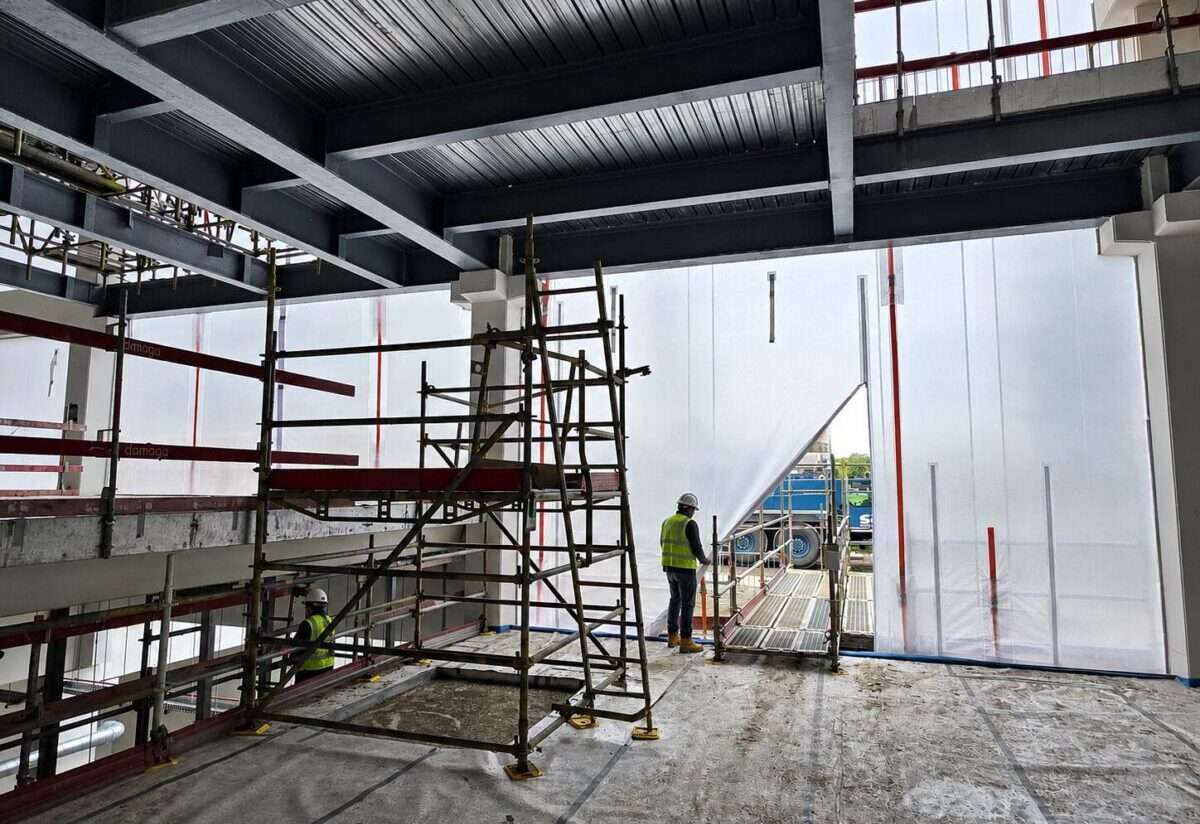
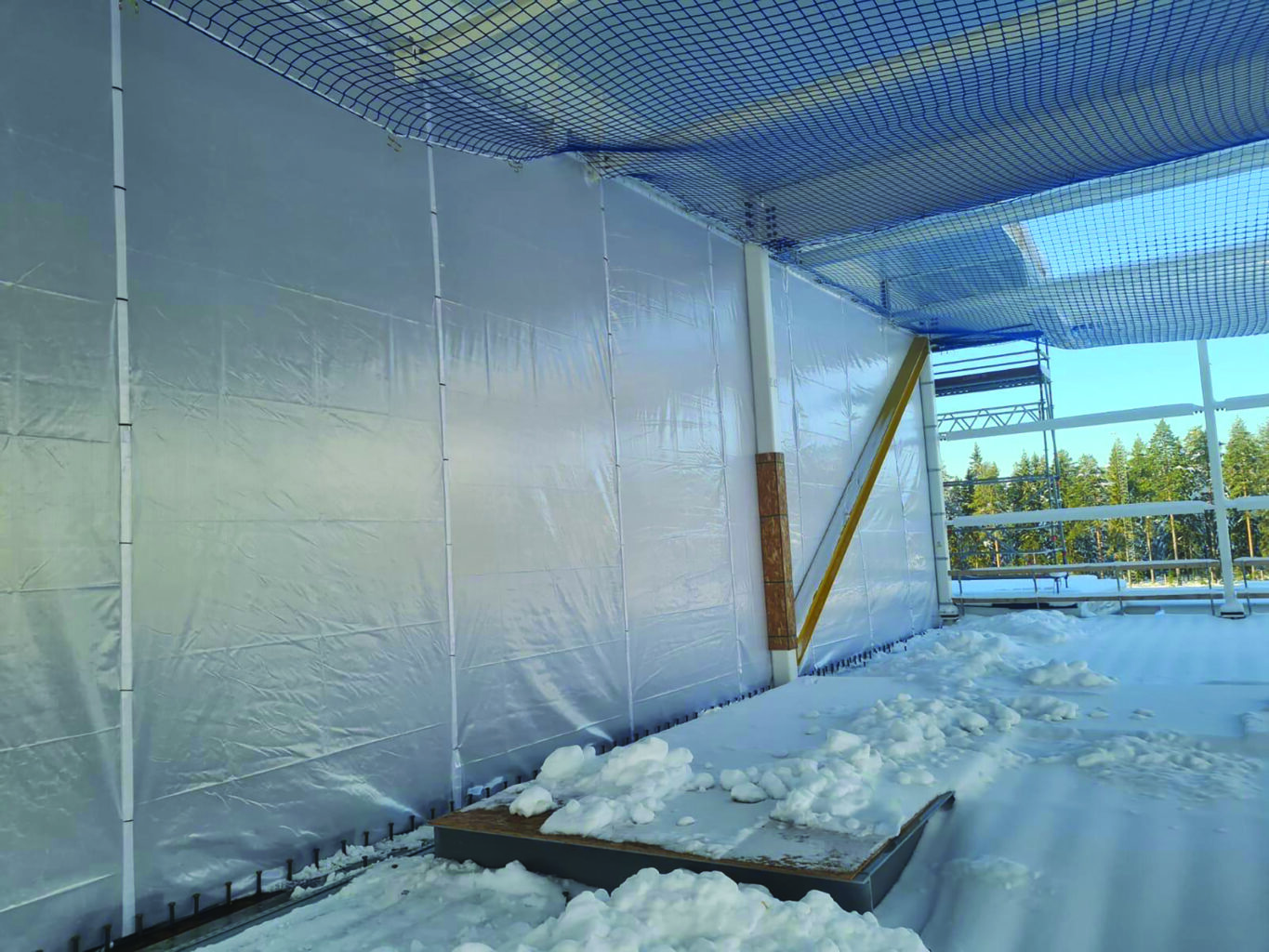
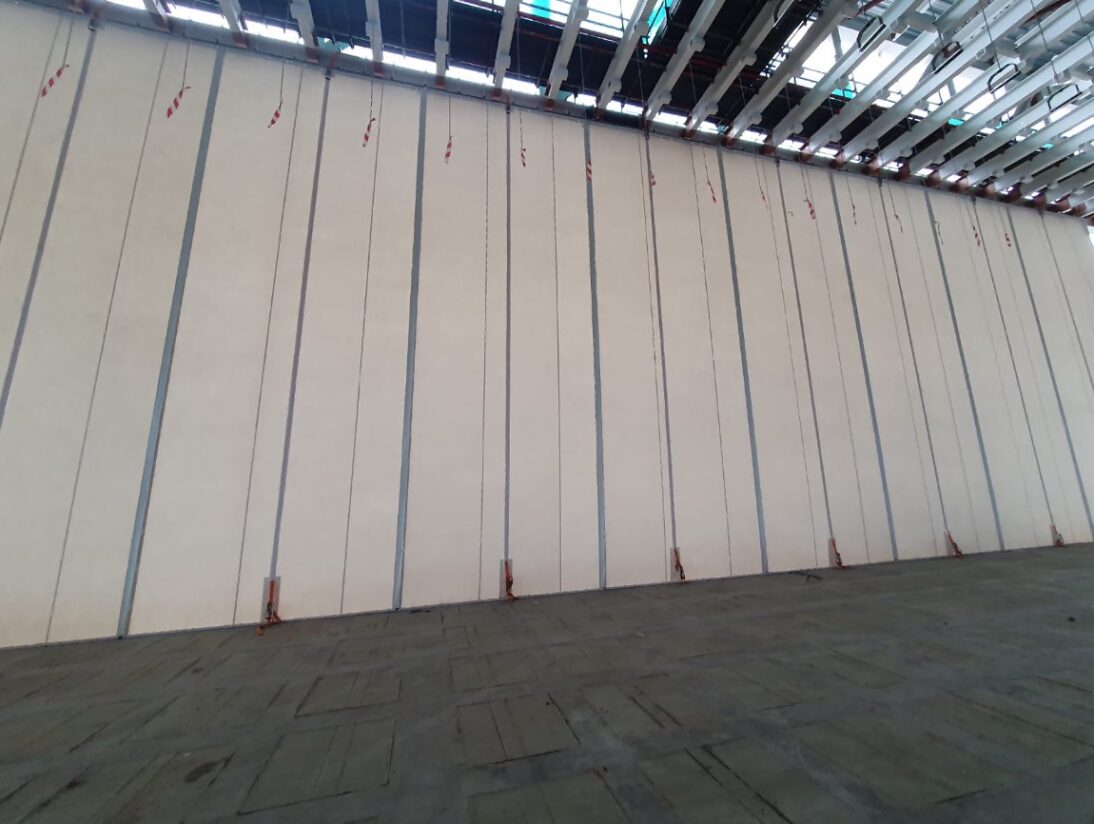
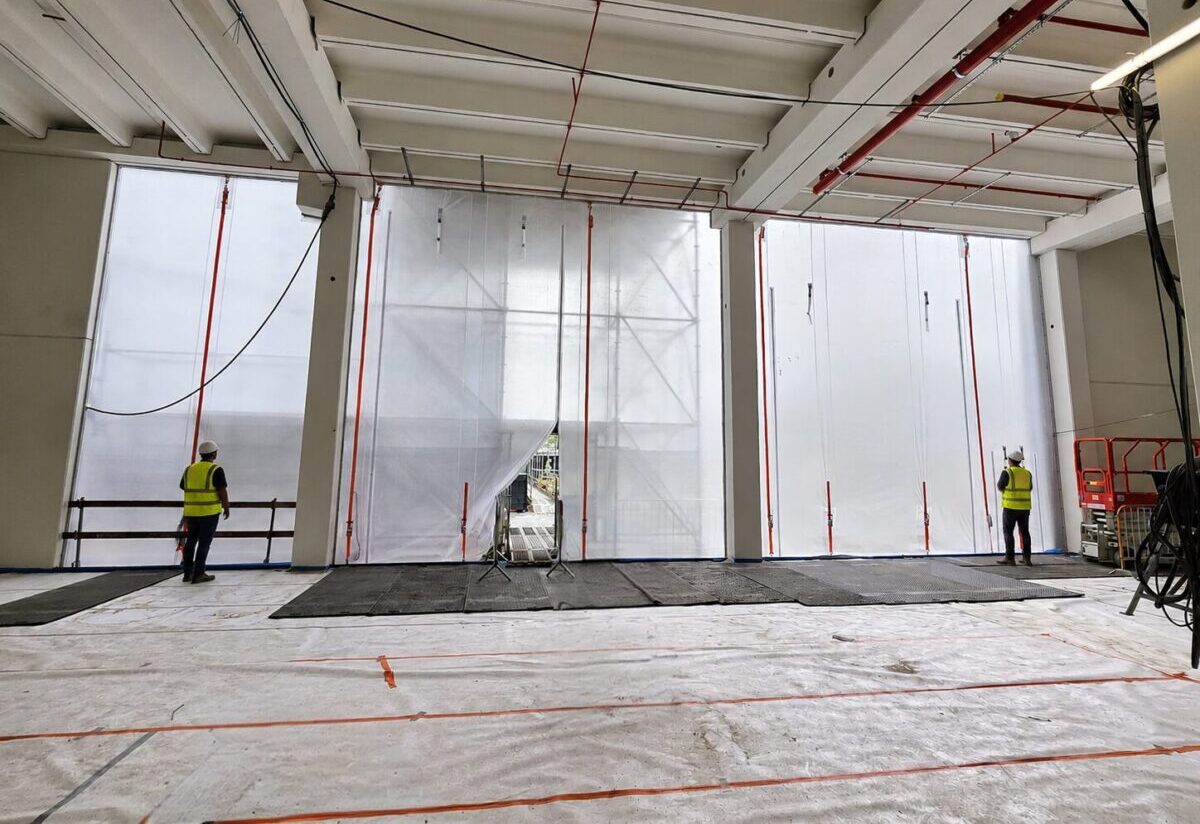
Democo brought in Westgate Global, who installed Flexiscreen, a tensioned-fabric enclosure system, along the open elevations. The temporary barrier sealed the building against the weather while exterior envelope work continued around it, keeping the site fully operational and letting Democo bring early interior fit-out activities forward with confidence.
Why weather protection matters on a biopharma schedule
For any construction project, delays to the facade or cladding package can quickly impact the schedule. Early fit-out work depends on dry, protected interior space. In life sciences construction, that risk is even higher: environmental control, cleanroom buildout, and equipment installation all require stable, contamination-free conditions from day one.
Protecting progress before cladding installation
Without an effective barrier, weather exposure risked disrupting interior work, damaging materials, and delaying the fit-out phase. The open elevations created a direct route for wind and rain into the building. Democo needed a weather protection solution that could be installed quickly, span the open facades, and hold up to active jobsite conditions without blocking access routes, sightlines, or ongoing work. On a project where every week of schedule slip has a real dollar cost, waiting wasn’t an option.
Traditional temporary sheeting wasn’t practical for the scale and shape of the openings and wouldn’t have met the site’s wind-load demands. Following a full survey, including wind-load calculations, Westgate Global used Flexiscreen’s suspended, modular system to form a large-scale barrier across the exposed facade areas, shielding the interior environment while construction continued on schedule.