Building data centers faster means planning for weather earlier, by Ben Gates, President
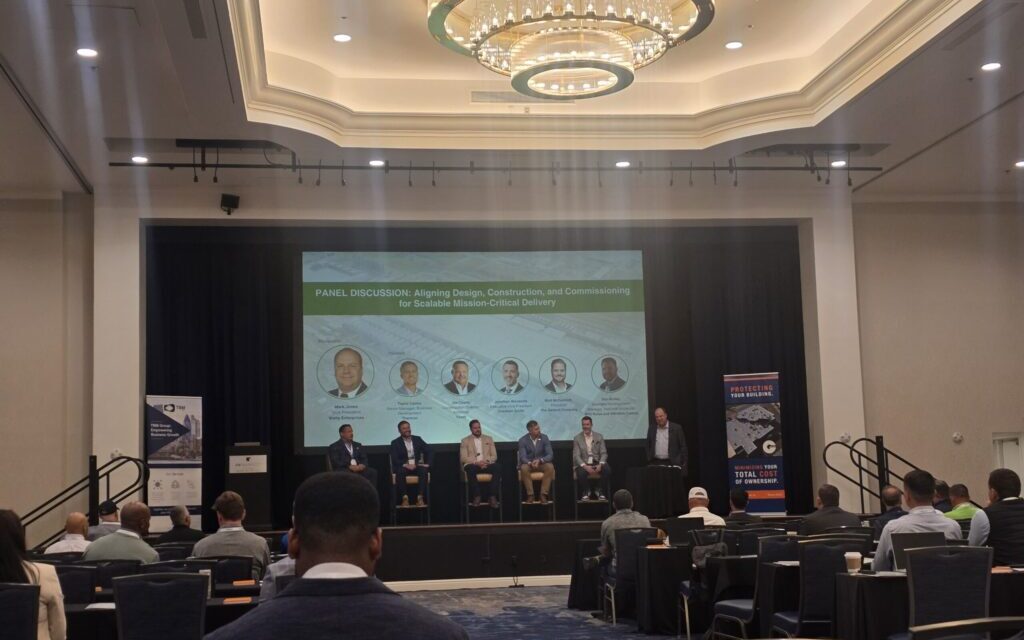
In Las Vegas, the conversation was clear: data centers need to be built faster.
Across two days at TBM Group's Data Center Construction, Design & Engineering Forum, the same discussion points kept coming up: how do we deliver capacity more quickly, without adding risk into the schedule?
The answers were consistent. Get the right stakeholders aligned early. Choose sites based on power availability, land strategy and speed to market. Solve for water, permitting, community license and regulatory timelines from the start. Use earlier procurement, prefabrication, modular construction and AI-supported planning to compress the schedule wherever possible. That is the right conversation to be having but there is one practical schedule risk that needs more attention: weather.
Matt McDermott from The Garland Company said something on stage that stayed with me: “North America has some of the toughest weather in the world.”
That matters because the data center buildout is moving into power-rich locations and many of those locations are exposed to harsher weather conditions. Texas. The Sun Belt. The central corridor. Northern markets working through hard winters. Extreme heat, hail, high winds, dust storms and cold-weather conditions are not side issues. They directly affect whether work can continue on site.
Stakeholder alignment, modular design, early procurement and AI-assisted sequencing are powerful tools. But they all assume one thing: that the schedule can keep moving.
When weather stops the build, the rest of the optimization stack loses impact.
That is why weather should be treated as a schedule risk from the start, not as something to manage once the problem appears on site. The cost of delay is too significant to ignore.
Industry-wide, data center project delays are averaging 8.5 to 12 months. For a delayed 60MW facility, the revenue impact can be around $14.2 million per month. On a hyperscale campus with 10 to 15 of those buildings, that quickly becomes a nine- figure monthly exposure. Across an average delay period, the impact can run well beyond a billion dollars on a single campus.
When the cost of delay is that high, every controllable source of delay deserves attention.
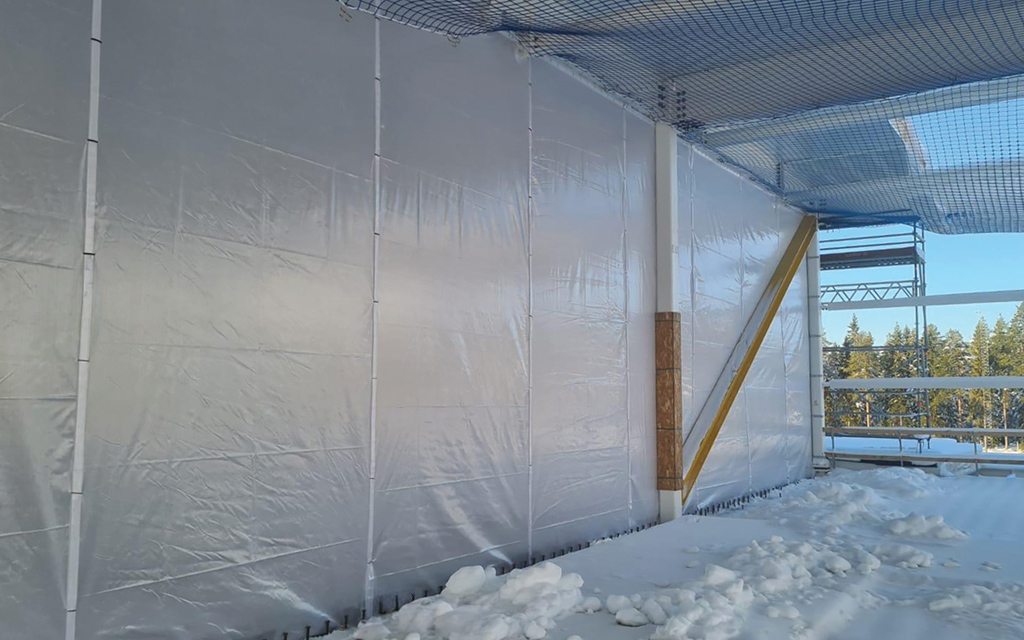
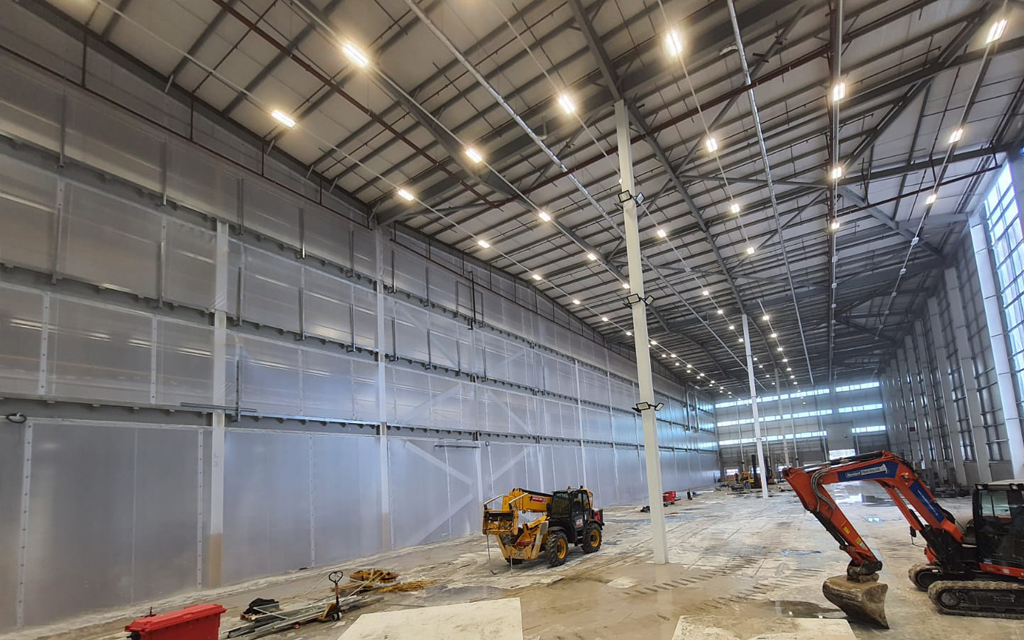
The good news is that weather is one of the more engineerable risks in the schedule. It starts with planning the temporary envelope earlier. That means designing for the actual season the system will be installed in, calculating the right wind loads and installing a structurally backed solution that can hold through the months before the permanent cladding is complete.
Done properly, that temporary envelope allows more work to continue.
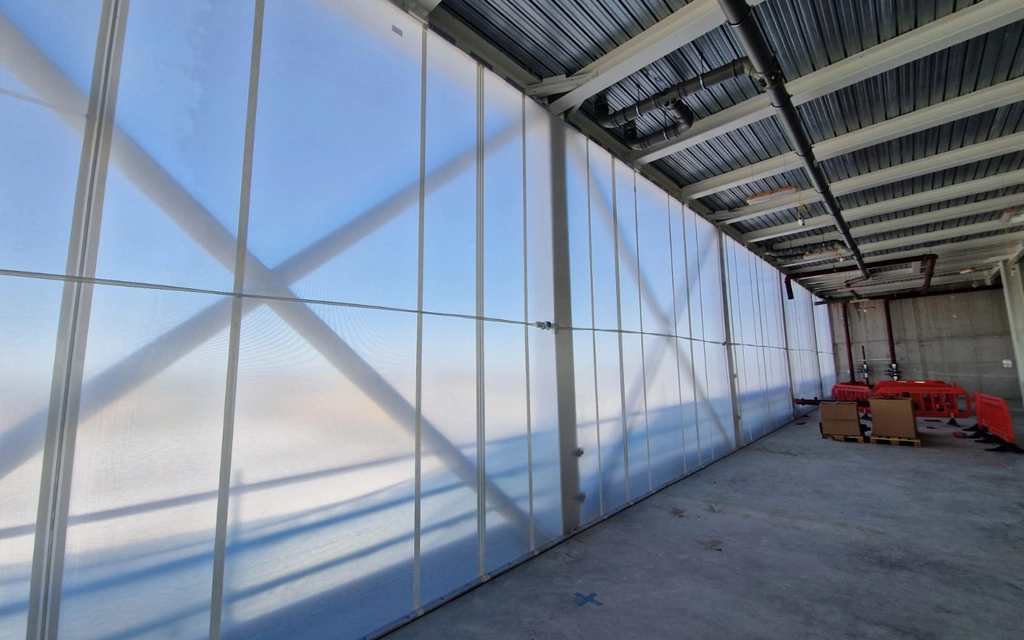
Concrete can be poured through colder months. Interior fit-out can start when the schedule requires it, not only when the weather allows it. MEP installation can happen behind a sealed building instead of an open structure. For a small percentage of the overall build value, weather exposure can be reduced as a first-order schedule risk.
That does not replace the work the industry is already doing around stakeholder alignment, site strategy, modular construction or AI-enabled delivery. It strengthens it.
Because faster delivery is not only about compressing the ideal schedule. It is also about protecting the schedule when real site conditions start to put pressure on it.
Over the next 12 months, that is where Westgate Global will be focused: working with GCs and their clients to de-risk and shorten build schedules, so critical data center capacity can be delivered on time. For anyone delivering hyperscale or colocation capacity in North America over the next 18 months, the question is simple: Where is your schedule exposed to weather, and what would it cost to take that exposure off the table?
That is the conversation I want to keep having with the people I met in Vegas, and with anyone else looking at how to build faster without leaving weather risk sitting in the schedule.
Related Posts