
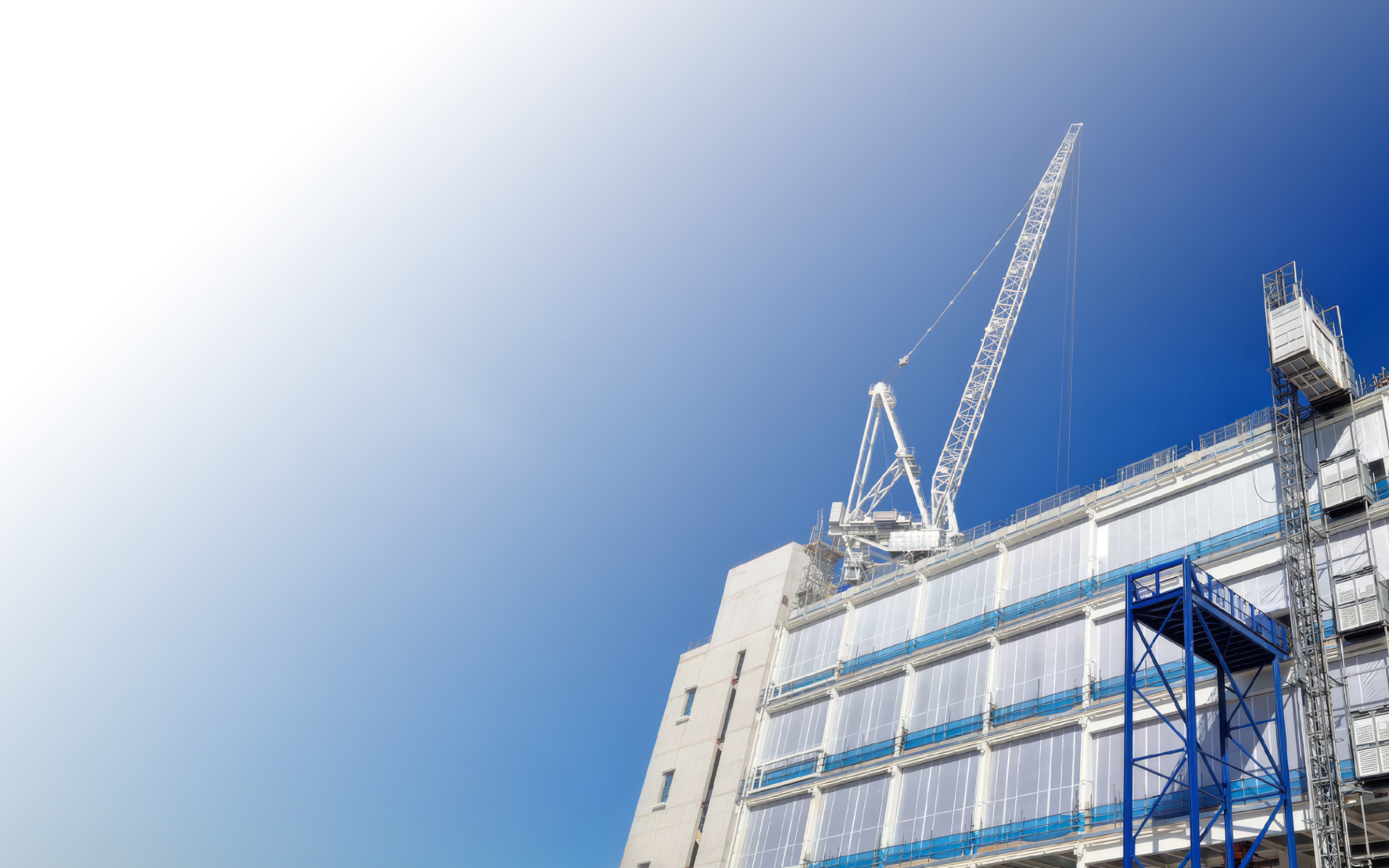
Keep data center construction moving, even before the building envelope is complete
Engineered weather protection and dust containment for data center contractors, developers and delivery teams.
Westgate Global designs, engineers and installs temporary screening systems that help data center contractors protect construction schedules from weather delays, dust contamination and site constraints. Our solutions allow selected interior build-out activities to begin before the permanent building envelope is complete, while separating sensitive areas from ongoing construction.
Our partnerships







Why protecting your construction schedule matters
Why protecting your construction schedule matters
The challenge isn’t just the weather. It’s what happens to your schedule when work stops.
Data center construction schedules leave little room for delay. Yet major milestones often depend on the building envelope being sufficiently complete to provide the conditions needed for interior construction, MEP installation and commissioning.
High winds can interrupt exterior work. Heavy rain can prevent exposed areas from progressing. Extreme cold can affect concrete curing and increase heating demands. Each disruption can place additional pressure on downstream activities and the planned ready-for-service date.
Engineered temporary weather protection gives contractors another option. By creating protected work areas before permanent enclosure is complete, project teams can bring forward selected activities, coordinate parallel workstreams and reduce exposure to weather-related schedule disruption.
Rather than relying entirely on favorable conditions, contractors can plan temporary protection into the construction sequence from the outset.
A one-month delay to a 60 MW data center could put millions of dollars in potential revenue at risk.
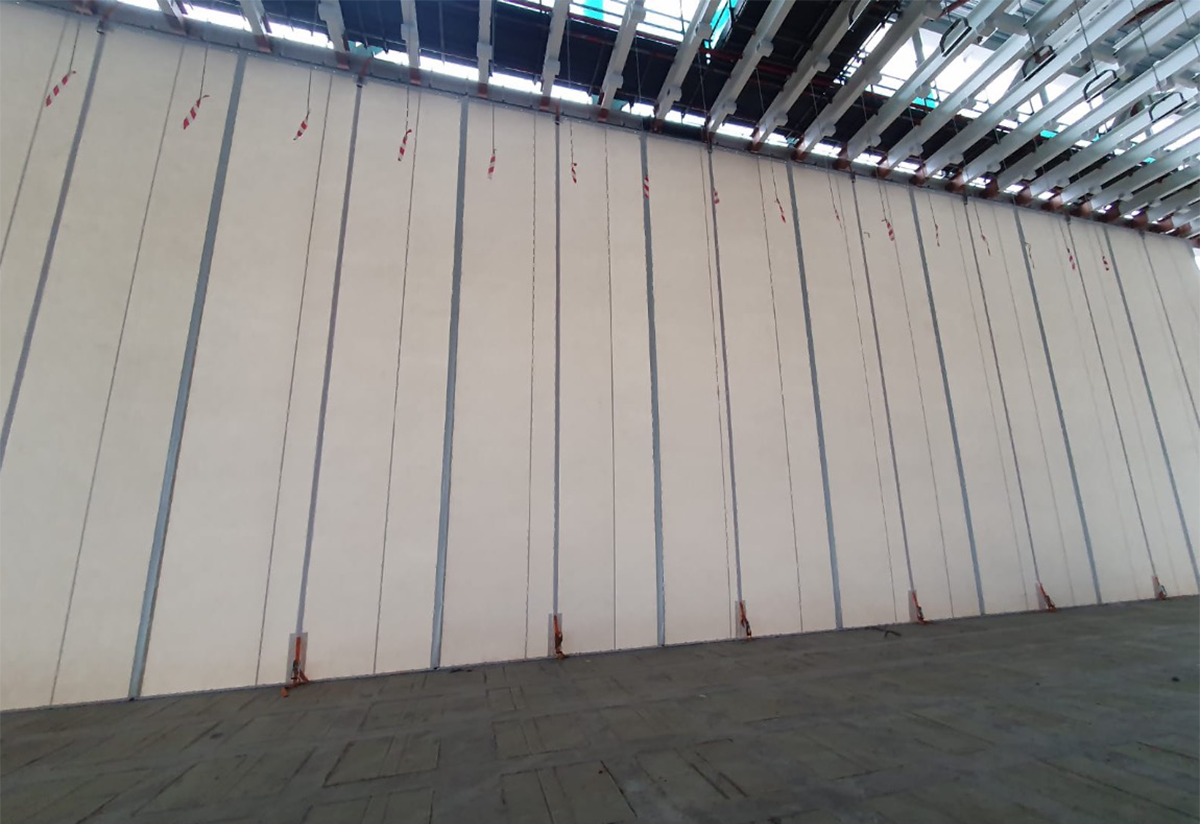
Protecting the schedule can protect project value
For data center owners, developers and contractors, construction delays can have consequences beyond additional labor and equipment costs. Deferred commissioning, delayed handover and later operational readiness can all affect the commercial performance of a project.
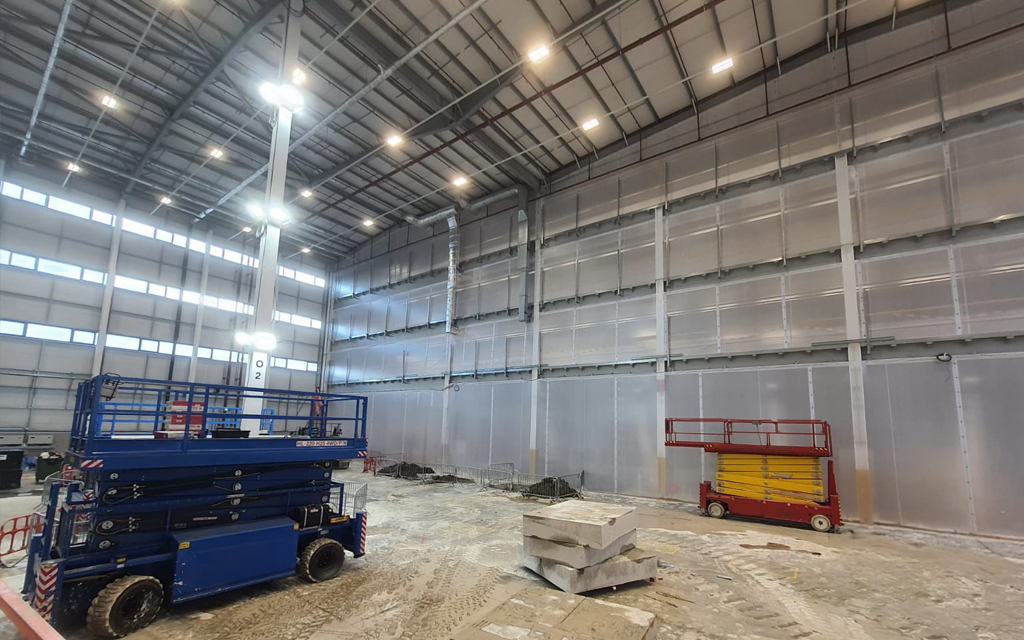
The opportunity is to reduce avoidable delays before they reach the critical path.
Temporary screening can help project teams make better use of available construction time, particularly when permanent exterior work and interior activities need to progress concurrently.
Three construction challenges. One engineered approach.
Flexiscreen™ creates a weather and dust-tight barrier to protect open-envelope and internal works from disruption.
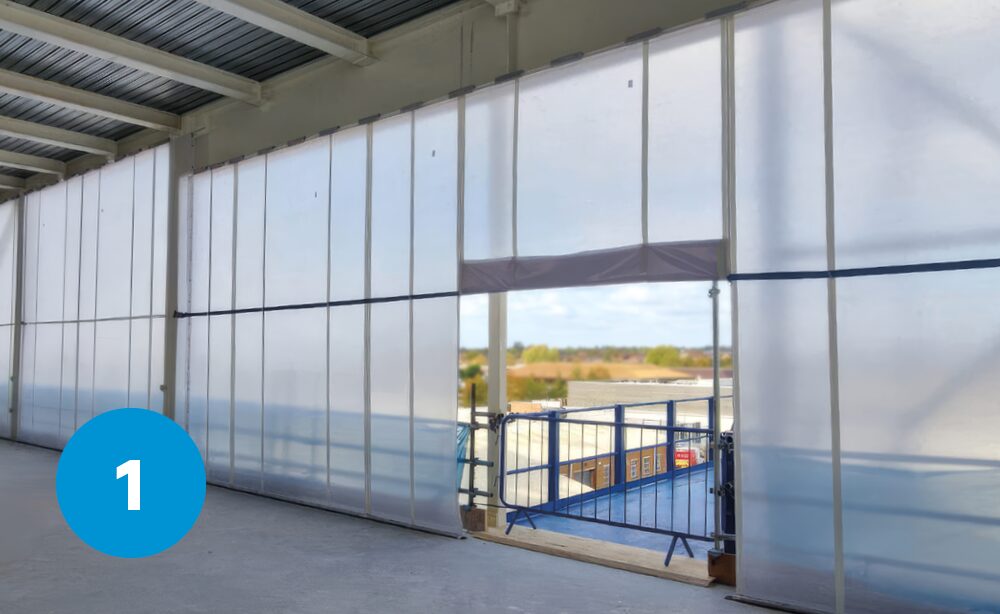
Start interior build-out before envelope completion
Don’t let an incomplete exterior automatically delay work inside.
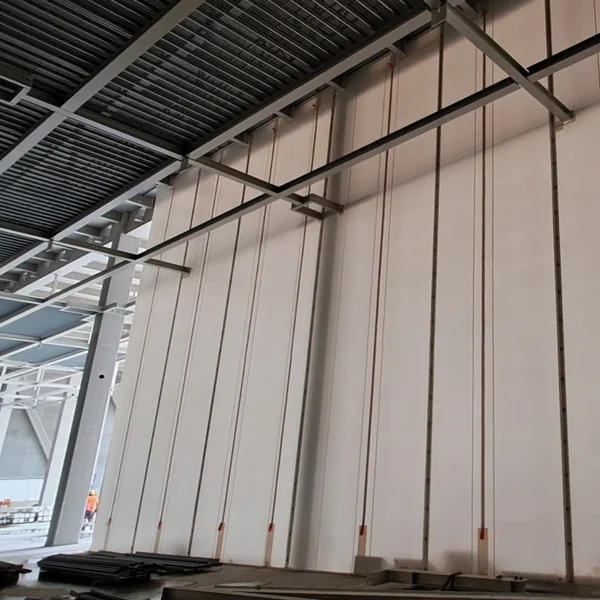
Engineered temporary weather screening protects designated work areas from wind, rain and temperature fluctuations, allowing suitable interior construction activities to proceed while permanent exterior work continues.
- Create protected environments before the permanent façade is complete.
- Support earlier interior build-out and MEP installation.
- Reduce exposure to weather-related interruptions.
- Help maintain conditions required for temperature-sensitive activities.
- Adapt screening as construction progresses.
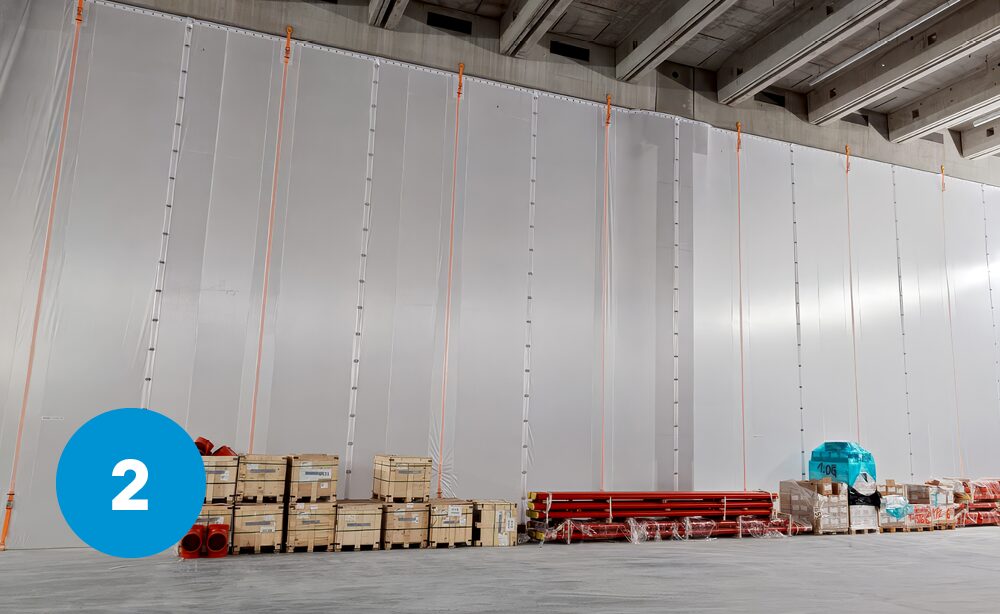
Protect commissioned areas during active construction
Keep sensitive equipment and operational spaces separated from ongoing work.
As data centers move through phased construction, commissioning and expansion, teams may need to work alongside completed or operational spaces.
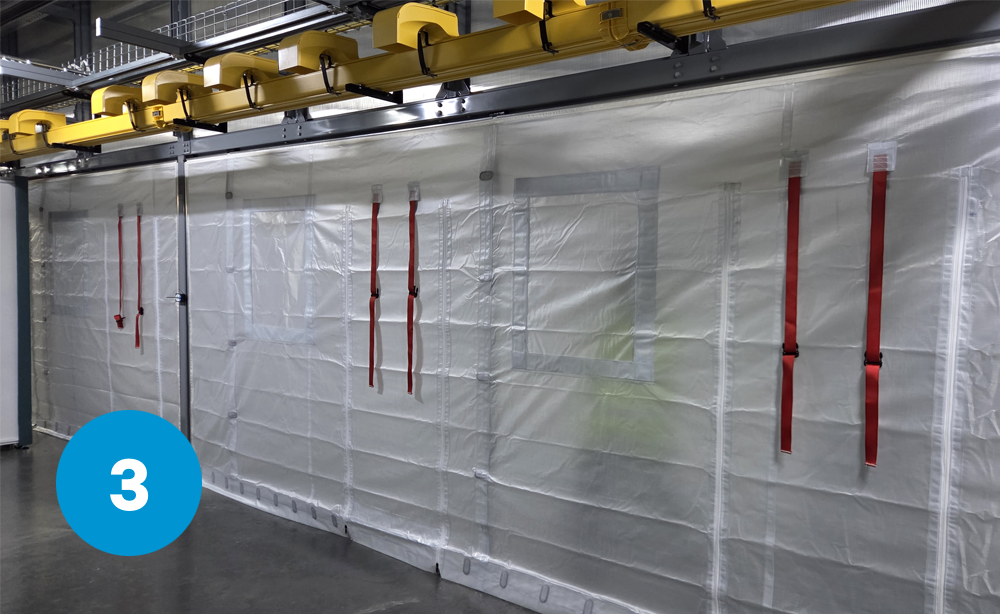
Temporary dust containment screening creates physical separation between active construction and areas requiring tighter environmental control.
- Limit the migration of construction dust and debris.
- Separate construction activities from sensitive equipment.
- Support controlled access between work zones.
- Help maintain appropriate environmental conditions during phased handover.
- Reconfigure screening as project requirements change.
Create controlled environments for commissioning
Support testing and commissioning without unnecessary interference from adjacent construction.
Temporary containment can help establish separated work zones for equipment installation, testing and commissioning.
- Provide temporary containment for designated testing areas.
- Support airflow separation and temperature management.
- Accommodate phased commissioning requirements.
- Allow screening to be repositioned as testing progresses.
- Remove temporary installations when they are no longer required.
Watch how Flexiscreen™ provides engineered protection for demanding construction environments
Each installation is assessed against the relevant project requirements, including structural interfaces, wind loading and environmental performance.
Proven protection in extreme conditions
Proven protection in extreme conditions
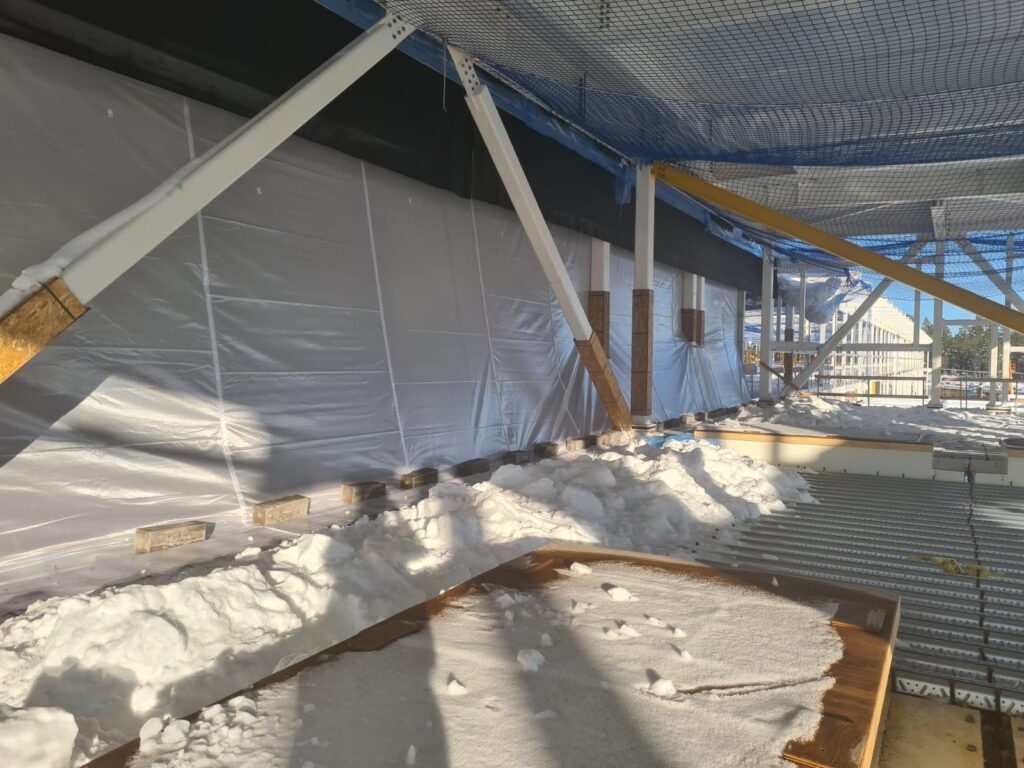
Keeping concrete work moving at -4°F
On a data center construction project in northern Sweden, winter temperatures threatened the schedule for concrete pours.
Westgate Global supplied approximately 10,800 sq ft of Flexiscreen temporary weather protection to enclose an exposed section of the building. The engineered system helped retain heated air within the working area, allowing concrete work to continue despite sub-zero external conditions.
The screening also reduced heat loss compared with the lower-seal alternatives considered, helping the contractor control heating costs.
Although completed in Europe, the project demonstrates an approach relevant to data center developments in cold-climate US regions, where winter construction can create similar challenges.
How Westgate Global supports your project
From initial assessment through installation and removal, our team helps integrate temporary protection into the construction plan.
We review your construction schedule, site conditions, planned work areas and sequencing constraints to identify where temporary screening could support progress.
Our team develops a project-specific screening design, considering wind loading, structural interfaces, access requirements, environmental conditions and applicable safety requirements.
We coordinate the specification with relevant project stakeholders and provide supporting technical documentation for review.
Installation is planned around the construction sequence and site activities, with the aim of minimizing disruption to surrounding work.
Modular screening can be repositioned, reconfigured or removed as work areas change and permanent building elements are completed.
Keep construction moving, even when conditions aren't ideal.
Weather exposure, dust migration and incomplete building envelopes can restrict when critical activities take place. Engineered temporary containment helps contractors manage these constraints, creating opportunities to progress work that might otherwise have to wait.
Without engineered containment
- Interior build-out delayed
- Work must wait until areas are sufficiently protected from the elements.
- Weather drives the schedule
- Rain, wind and extreme temperatures disrupt exposed construction activities.
- Construction zones limit progress
- Dust-generating work restricts activities near sensitive equipment and completed areas.
- Sequential work increases pressure
- Dependencies between exterior work, interior build-out and commissioning limit flexibility.
With engineered containment
- Earlier interior build-out
- Protected work areas can support selected activities before the permanent envelope is complete.
- Reduced weather exposure
- Temporary screening helps maintain workable conditions and limit weather-related interruptions.
- Better separation of work zones
- Dust containment supports construction alongside sensitive or operational areas.
- Greater scheduling flexibility
- Parallel workstreams and phased commissioning become easier to plan and coordinate.
Your guide to protecting data center construction schedules
Let's discuss your construction schedule
Whether you’re planning a new data center, expanding an operational facility or coordinating phased commissioning, Westgate Global can help assess where temporary screening could support your project.
Talk to our US team about the site conditions, schedule constraints and protection requirements you’re working with.